
Port of LA logs best three-month stretch on record
The Port of Los Angeles moved 2.9 million TEUs from June through August 2026, its strongest three-month run ever, with August volume at 955,907 TEUs.
What's happening
The Port of Los Angeles handled 955,907 TEUs in August 2026, roughly even with a year earlier and 6% above its five-year average. Combined with June and July, the port moved 2.9 million TEUs over three months, the best stretch in its history.
Year-to-date volume passed 7 million TEUs, up 1.5% over 2025. Exports remained weak while imports ran above the five-year norm. Port of Los Angeles Executive Director Gene Seroka said the port has good momentum heading into the final months of the year and that September was shaping up to be strong, while noting retail leaders are optimistic about the holiday season despite headwinds from fuel costs and tariffs. The year-to-date pace is 5% above the port's five-year average.
- Loaded imports: 500,302 TEUs in August, 7% above the five-year average
- Loaded exports: 115,561 TEUs, down 9% year over year
- Empties: 340,044 TEUs, up 4% year over year
- Year to date: Just over 7 million TEUs, up 1.5%
What it means for owners, tenants and investors
Sustained import volume supports demand for port-proximate warehousing, transloading and container yards in the South Bay, Carson, Wilmington and Harbor Gateway. It also underpins truck parking and industrial outdoor storage values near the harbor.
The weak export number is a reminder that trade policy still affects cargo mix. Owners of port-adjacent assets should expect demand to follow import cycles, which remain sensitive to tariffs and retailer inventory decisions. Empty container volume, up 4% year over year, reflects the imbalance between imports and exports and the steady return of equipment to Asia. For logistics operators, that means continued demand for chassis and container storage close to the terminals.
A record summer at the port is supportive for South Bay industrial occupancy heading into 2027.
What to watch
September and October volumes, which will show whether retailers pulled holiday cargo forward or whether the momentum carries into year-end. Watch also for any change in export demand, which fell 9% year over year in August.
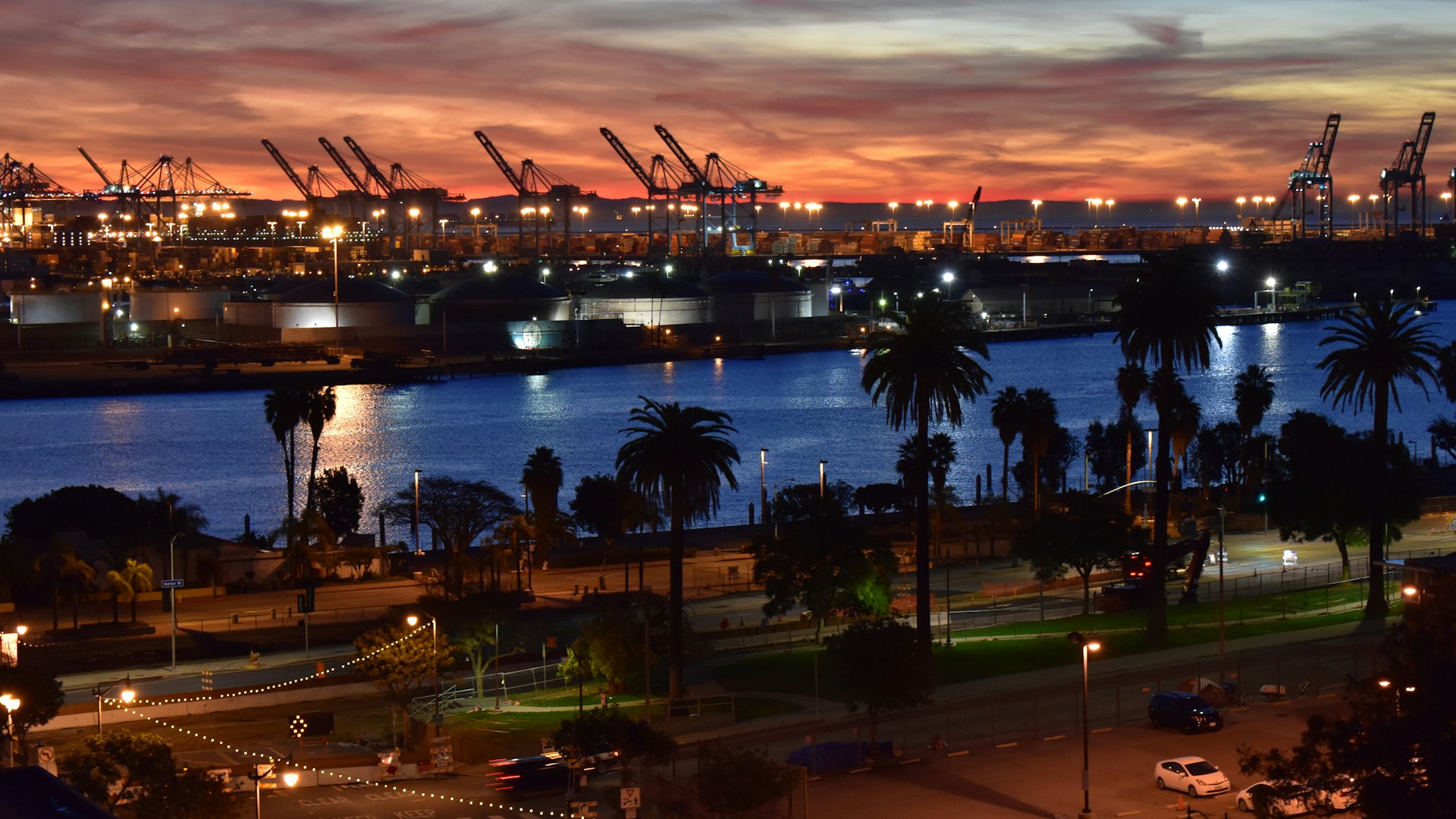
Photo: Adam Young / Unsplash.
Stop searching, start finding.
Tell us your size, submarket and timing. We research the whole market, including off-market, and come back with options.